
Farewell to honorary artistic director Dr Mirko Cuderman
Published February 27, 2025
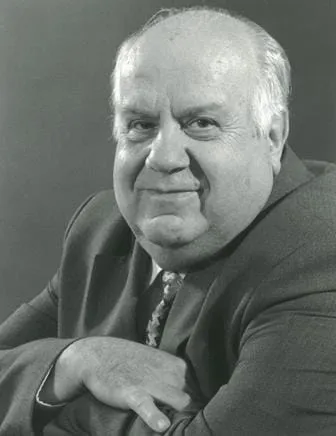
Dr Mirko Cuderman, Slovenian conductor, choirmaster, musicologist and priest
* 18 July 1930 + 27 February 2025
It is with sadness that we announce that our musical father and honorary member of the Slovenski oktet, Dr Mirko Cuderman, has departed to his Creator. Dr Cuderman worked with the Slovenski oktet as artistic director from 2000 to 2008. Throughout his long musical career he set high musical standards and brought the music of the world’s great masters to Ljubljana. In recognition of his outstanding contribution to the work of the Slovenski oktet, the ensemble named him an honorary member in 2010.
After completing his studies at the Faculty of Theology in Ljubljana, he studied at the Vienna Academy of Music and Performing Arts and at the Faculty of Philosophy, where he also gained his doctorate in 1960. On his return to Ljubljana he was, until 1970, regens chori of Ljubljana Cathedral. At that time the Slovenian Philharmonic employed him as head of its archive. In 1968 he founded the Consortium musicum, which, as a leading amateur choir, devoted itself for more than three decades to the performance of vocal-instrumental and a cappella music. In the 1980s he accepted the post of conductor of the RTV Slovenija Chamber Choir. During this period he also became a lecturer in choral literature, performance practice and conducting at the Academy of Music in Ljubljana. At his initiative and under the auspices of the Ministry of Culture of the Republic of Slovenia, the Slovenian Chamber Choir (today the choir of the Slovenian Philharmonic) was founded in 1991; he was its artistic director and choirmaster from its foundation until his retirement in 2009. From 2000 to 2008 he was the artistic director of the Slovenski oktet.
For his work he received numerous awards and honours: the Župančič Award (1993), the Decoration of Honour for Freedom of the Republic of Slovenia (2001), the Order for Merits (2007), the Gallus Plaque, the JSKD Gold Plaque (2011), and he also became the first honorary citizen of Preddvor (2012). In 2011 RTV Slovenija made a documentary film about him, Regens Chori, a portrait of Mirko Cuderman, for his 80th birthday, and in 2022 he received the Prešeren Award.
Excerpt from the book by B. Pangerc: Slovenski oktet, Ljubljana, 2007
MIRKO CUDERMAN
Artistic director of the Slovenski oktet since 2000
Dr Mirko Cuderman completed his studies at the Faculty of Theology in Ljubljana, and in 1960 gained his doctorate in musicology at the University of Vienna. Until 1970 he was regens chori at Ljubljana Cathedral, after which he took a post at the Slovenian Philharmonic as head of its archive. In 1968 he founded the choir “Consortium musicum”, which, as a leading amateur choir, has for more than three decades devoted itself to the performance of vocal-instrumental and pure choral music. In the 1980s Dr Cuderman accepted the post of conductor of the “RTV Slovenija Chamber Choir”. During this period he lectured in choral literature, performance practice and conducting at the Academy of Music, and he contributed significantly to the founding of the “Department of Church Music”. At his initiative and under the auspices of the Ministry of Culture, the only Slovenian professional choir, the “Slovenian Chamber Choir”, was founded in 1991; he is still its artistic director and choirmaster today.
Dr Mirko Cuderman has received numerous recognitions and honours at home and abroad, and in 2002 he was awarded the Decoration of Honour of the Republic of Slovenia.
He has been the artistic director of the Slovenski oktet since 2000.
What is your view of the role and importance of the Slovenski oktet today?
The same as when it was founded. The main role of the Slovenski oktet is to cultivate Slovenian song. In its essence the octet has not changed at all. The last line-up – I mean the one that in 1996 announced the end of the Slovenski oktet – had somehow come to terms with the fact that it would be the last, because it seemed almost impossible to replace all eight singers at once. And in that style they performed at home in Slovenia, among Slovenes abroad and also in the USA, presenting these as the last performances of the last Slovenski oktet. But the line-ups of the octet had always changed. It also seemed to me a pity and unnecessary for it to stop. And so a new Slovenski oktet came into being, which was not new, but merely a continuation of the previous one. In terms of sound, too, the octet I took over strove to resemble the previous one. Such pronounced and powerful voices were not quite their characteristic, however, so I saw no point in that way of singing. I constantly “pulled them back” until we “arrived” at a kind of chamber sound which, precisely because of its softness and roundness, draws in the listener.
I still have the fondest memories of the performances and concerts of the very first line-up of the Slovenski oktet. There were no such singers afterwards. They had a distinctive way of interpreting, they sang more slowly, and they simply revelled in the sound.
You know, we Petrovčičs were friends. Roman and Tone sang in Trnovo; at that time I was conducting the Trnovo church choir, and they were already singing under my direction then.
Slovenian composers used to write a great deal for the octet. It was an honour to them and a prestige to the octet. Do contemporary Slovenian composers still have that ambition? Do pieces dedicated to the Slovenski oktet come to your desk, in the hope that it will perform them?
Hardly. The point of creating for contemporary Slovenian composers today lies in composing for larger instrumental ensembles. Vocal music hardly interests them any more. And if they do write something for a choir, it is hard to perform because it is too complicated. Today’s composers prefer instrumental music, because it offers them greater expressive possibilities and they find their way better in modern composition. They can produce more, because the text is no obstacle to them. In fact, for contemporary composers the text is no longer important at all. That is why the voice has also been pushed aside. Scarcely any composer still writes for choir; among those who still have a feeling for the voice are Ambrož Čopi, Aldo Kumar and Andrej Misson. Lojze Lebič also writes for choir, but he is terribly demanding to perform.
I myself often recall what Matija Tomc passionately championed: “We must strive to create Slovenian music, so that the voice becomes characteristic of Slovenian music!”
Today, however, Slovenianness has been pushed into the background. Composers reject the title “Slovenian composer”, as if it limited their creative freedom.
What are the elements that characterise the Slovenski oktet today, making it recognisable among so many other octets and leading choirs?
Vocally they are better; in the quality of their voices they are the best; musically, too, they are above average. They already have so much experience that I do not need to teach them much. These singers already have their own style and sometimes they may disagree with me, but we talk it over and they adapt. Sometimes they also turn something their own way, which of course does not contradict the basic interpretation of the piece.
I also think that this is technically the best line-up there has been so far; in terms of intonation this is certainly true. The essence, of course, is that they put heart and soul into the music they perform. In that sense the first octet was unrepeatable; it consisted of singers who had sung since they were boys, who sang ceaselessly and constantly – in the family, in church, in company, at rehearsal and after rehearsal. Above all, they had already been singing in smaller ensembles thirty years earlier. They were singers through and through! Today that is no longer so; there are no longer singers who could – as in the past – sing in four or five parts. The most that today’s singers can do, in an ensemble or in company, is sing in thirds with a bass added.
We, our generation, knew folk and church songs by the dozen – I played the organ before I knew the notes, I picked out the keys and pedals by ear, and only then did theory come.
How do you approach the choice of programme?
We approach the choice of programme collectively. For example, for the 50th anniversary of the Slovenski oktet in 2001, which was an exceptionally important milestone, we agreed on an entirely Slovenian programme and chose ten art songs and ten folk songs. Our first interest – that is, our greatest attention – is devoted to Slovenian song; that is what the Slovenski oktet must sing. Otherwise, the programme must be coherent, not thrown together without rhyme or reason. Of course, the make-up of the programme also depends on the occasion, where and for whom you are singing. Depending on where we sing, we try to enrich the repertoire with a song from the place where we are guests, as the Slovenski oktet has always done.
We naturally also seek out novelties, or put together a programme by composer. At the moment we have decided to liven up the programme with a so-called sidestep. We have prepared a programme of songs sung by the famous German sextet “Comedian Harmonists” in the 1930s. It was a very well-known group that sang very interesting, entertaining and high-quality pieces; unfortunately, the singers were Jewish and Hitler persecuted them. Most of them ended up in the crematorium ovens at Auschwitz. The Slovenski oktet will sing their songs in a translation provided by Jože Humer, because the weight lies on the text, and if the text is comprehensible to the listener, the message is all the greater and reaches more deeply.
What do you cultivate most in interpretation? What is most important for you for the Slovenski oktet to convey to the listener?
The main thing is that the singing is technically accomplished and that the message of the text reaches the listener. I try to achieve this through rehearsal; sometimes a problem turns out to be particularly difficult. We must not forget that the Slovenski oktet is by its nature an amateur ensemble; the lads come to rehearsal in Ljubljana from all over Slovenia; they come after working hours, which each has put in at his own workplace; not infrequently they are tired; all this is very strenuous. Rehearsals are no game either; they are demanding and wearying. At rehearsal we revise the songs for the next concert, and what is not yet fluent we revise until it flows; we put together the programme for the future, and of course we also prepare new programmes.
We are also constantly building up the sound. We seek a common sound, which comes slowly, of its own accord, without the slightest forcing. The sound must flow on its own, in a long line, and then the phrase must still be worked out musically. In time the singers become so used to one another that this “happens” quite quickly.
In such an ensemble the voice of the individual comes first. Notes can be learnt. But if you do not have the voice, nobody can create it for you.
How do you explain the phenomenon of the Slovenski oktet: ever since it appeared on the Slovenian singing horizon it has filled halls and delighted audiences, at home and around the world. Even generational changes have not dented its myth.
The phenomenon of the Slovenski oktet lies in the fact that boyish singing is reproduced in its most ideal form and content.
The Slovenski oktet also has a negative significance, however; following its example hundreds of octets came into being, and as a result male choirs died out. Eight better singers wanted to create an octet and moved away from the choir.
The Slovenski oktet still fills halls because it has exceptional vocal and musical quality. And also a noble human quality – the singers of the Slovenski oktet are modest lads who above all love to sing. They are also popular as people, as individuals. And through their singing they radiate a special culture. Their singing is genuine and deeply felt. They themselves experience their singing deeply; they do not sing only for the audience, but also for themselves. The octet also gives many charity concerts.
With the Slovenski oktet we can speak of a myth. It will endure if the lads work diligently and conscientiously, and if a voice should weaken, they replace it without delay. These singers are mature enough to provide for a successor in good time.
Listeners’ taste has become sharper. Listening to choirs on radio and television, to records and, lately, to CDs has contributed to this. The Slovenski oktet has also helped to sharpen singing taste.
Nowadays singing must be technically flawless; that is so on the world stage too. Otherwise – despite everything I have said – I am of the opinion that choral music is somewhat neglected today, among listeners as well. People prefer to go to symphonic concerts. Choral singing still has enough listeners among local choirs, which is understandable, given the attachment to one’s home choir.
The Slovenski oktet, however, is something special, something outside the usual framework.
What possibilities for development does the current line-up still have, and where are the limits of that development?
That is a difficult question to answer. There is still some possibility, but vocally they will not become stronger, while technically everything can be achieved through practice. They can still refine themselves. This line-up, as it stands now, has at least fifteen more years of peaceful life ahead of it.
What would you say in conclusion, Dr Cuderman, as the current artistic director?
I wish the lads to persevere and to be disciplined in their lives; as singers they must give up many things. I would like them to be aware of this and to live accordingly.
Now they are the SLOVENSKI OKTET.
(Ljubljana, 6 July 2006)
Related news
You may also be interested in…
Concert in Borovnica
Farewell to the former president of KD Slovenski oktet
Anton Bebler, Slovenian political scientist, defence expert, professor, diplomat and politician, * 10 March 1937, Moscow, † 5…